
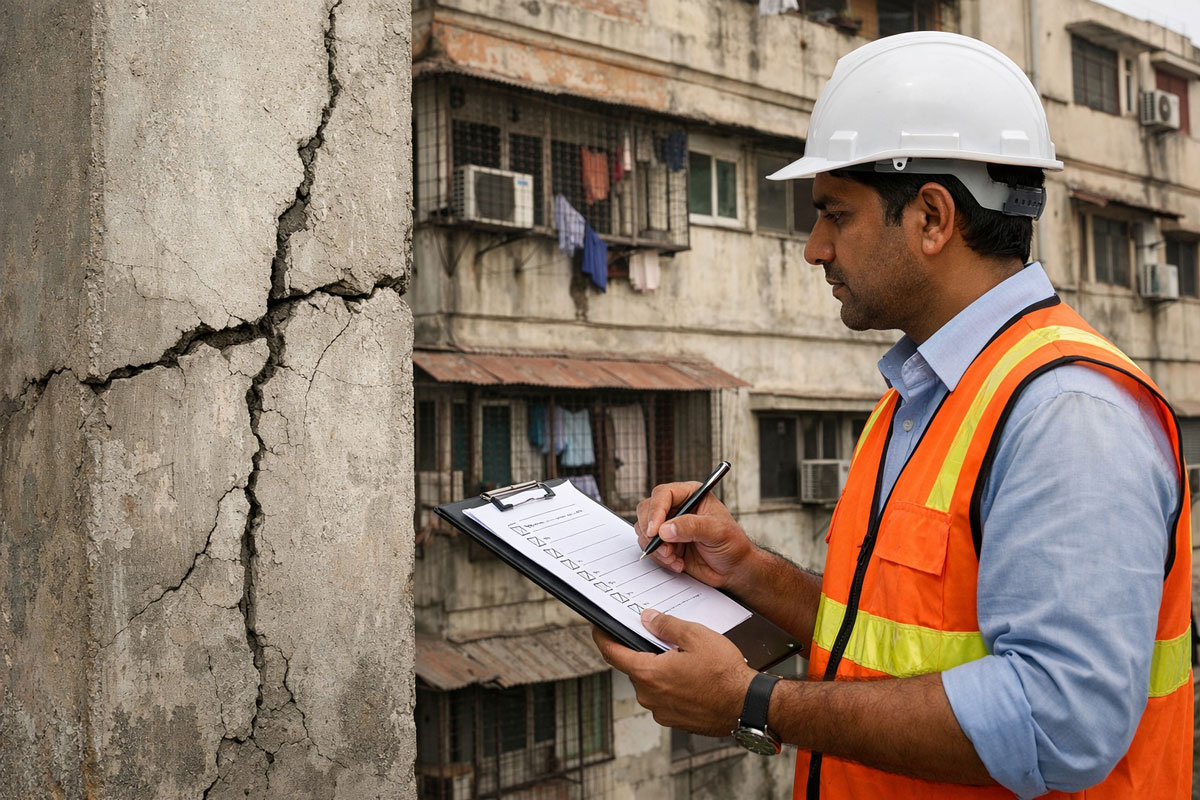
In India’s rapidly urbanizing landscape, buildings are going up faster than ever. But while construction gets attention, maintenance often does not. This is where structural audits come into the picture. They are not just technical exercises—they are essential safety checks that can prevent accidents, financial losses, and legal complications.
One of the most common questions property owners, facility managers, and developers ask is: How often should a structural audit be conducted? The answer depends on several factors, including building age, usage, and local regulations.
Why Structural Audit Frequency Matters
Structural audits are designed to assess the health and stability of a building. Over time, all structures experience wear and tear due to environmental exposure, load variations, material degradation, and poor maintenance.
In India, factors such as:
- Extreme weather conditions (heat, monsoon, humidity)
- Pollution and corrosion
- Construction quality variations
can accelerate structural deterioration. Without periodic audits, small defects like cracks or corrosion can evolve into serious structural failures.
Regular audits help:
- Identify early-stage damage
- Extend the lifespan of buildings
- Ensure occupant safety
- Maintain compliance with local laws
General Structural Audit Guidelines in India
India does not have a single unified national code strictly defining structural audit frequency for all buildings. However, multiple municipal bodies and engineering guidelines provide widely accepted norms.
1. Buildings Up to 5 Years Old
For newly constructed buildings, structural audits are generally not required immediately after completion, assuming proper construction practices and certifications are in place.
However, a baseline inspection is recommended within the first 3–5 years to:
- Verify construction quality
- Identify early defects
- Establish a performance benchmark
2. Buildings Between 5 to 15 Years
Buildings in this age range should ideally undergo structural audits once every 5 years.
At this stage:
- Minor deterioration may begin
- Waterproofing issues and cracks can appear
- Load changes (renovations, equipment additions) may impact the structure
Regular audits during this period help prevent long-term damage.
3. Buildings Between 15 to 30 Years
For mid-age buildings, the recommended audit frequency increases to once every 3–5 years.
This is a critical phase because:
- Reinforcement corrosion may begin
- Concrete strength may reduce
- Structural elements may weaken
Timely audits allow for repair and retrofitting before issues become severe.
4. Buildings Above 30 Years
Older buildings require frequent structural audits—typically every 2–3 years.
In many Indian cities, audits become mandatory after a certain age:
- Increased risk of structural fatigue
- Material degradation becomes significant
- Safety risks rise considerably
For such buildings, audits are not optional—they are essential for continued occupancy.
Mandatory Structural Audit Requirements in Major Cities
Some Indian cities have implemented strict regulations to ensure public safety.
Mumbai
Mumbai has one of the most detailed frameworks due to its aging building stock.
- Buildings above 30 years: Structural audit is mandatory
- Frequency: Every 3 years
- Older buildings (above 50 years): More frequent inspections may be required
Housing societies must submit audit reports to local authorities, failing which penalties may apply.
Delhi
While Delhi does not have as strict enforcement as Mumbai, structural audits are increasingly recommended, especially for:
- High-rise buildings
- Commercial complexes
- Institutional structures
Authorities emphasize periodic inspections, particularly for older buildings and those exposed to environmental stress.
Other Cities
Cities like Pune, Bangalore, and Chennai are gradually moving toward stricter compliance frameworks, especially for:
- High-occupancy buildings
- Industrial structures
- Public infrastructure
Factors That Influence Audit Frequency
While age is the primary factor, several other parameters determine how often a structural audit should be conducted.
1. Type of Building
Different structures face different stress levels:
- Residential buildings may have moderate wear
- Industrial buildings face heavy loads and vibrations
- Commercial complexes experience high footfall
Industrial and commercial buildings typically require more frequent audits.
2. Environmental Exposure
Buildings located in:
- Coastal areas (high corrosion risk)
- High rainfall zones
- Industrial pollution zones
need more frequent inspections due to accelerated deterioration.
3. Usage Changes
If a building undergoes:
- Renovation
- Change in occupancy type
- Addition of heavy equipment
a structural audit should be conducted immediately, regardless of the previous audit schedule.
4. Visible Signs of Distress
Certain warning signs demand immediate attention:
- Cracks in beams, columns, or slabs
- Water seepage and dampness
- Rust stains indicating reinforcement corrosion
- Uneven settlement
Ignoring these signs can lead to serious structural failures.
What a Structural Audit Typically Includes
A professional structural audit is a comprehensive evaluation process that involves:
- Visual inspection of structural elements
- Non-destructive testing (NDT) such as rebound hammer and ultrasonic testing
- Assessment of material strength
- Corrosion analysis
- Load evaluation
The final output is a detailed report that categorizes the building condition and recommends actions such as:
- Repairs
- Strengthening
- Retrofitting
- Demolition (in extreme cases)
Risks of Ignoring Structural Audit Guidelines
Failing to conduct audits at the recommended frequency can have serious consequences.
Safety Risks
Structural failures can lead to:
- Injuries or loss of life
- Sudden building collapse
Legal Consequences
Authorities may impose:
- Penalties
- Evacuation orders
- Legal liabilities in case of accidents
Financial Losses
Delayed maintenance often leads to:
- Higher repair costs
- Reduced property value
- Business disruption
The Role of Professional Consultants
Structural audits should always be conducted by qualified structural engineers or specialized consultancy firms. Expertise is critical to ensure accurate assessment and reliable recommendations.
Professional consultants use advanced tools, standardized methodologies, and engineering judgment to evaluate structural integrity. Their role goes beyond inspection—they provide actionable insights to extend the building’s life and ensure safety compliance.
Structural audit frequency in India is not just a regulatory requirement—it is a critical aspect of responsible building management. While general guidelines suggest audits every 5 years for newer buildings and more frequently for older ones, the actual frequency should be determined based on age, usage, and environmental conditions.
In a country where infrastructure is under constant stress, proactive structural audits can make the difference between safety and disaster. For building owners, housing societies, and facility managers, the message is clear: don’t wait for visible damage—plan audits proactively and follow recommended timelines.