
Often neglected measures against lightning protection, wherein this is generally interpreted with external lightning protection measures such as Franklin rod or meshes with earthing connection on building topmost points; internal protection measures are equally important.
A complete design philosophy for LPS (Lightning Protection System) should include effective implementation of Lightning equipotential bonding (EB) and the SPM (Surge protection measures).
Electrical surges rarely announce themselves. There is no explosion, no visible damage, and often no immediate failure. Yet, over time, these brief spikes in voltage quietly degrade equipment, corrupt data, and shorten the lifespan of critical systems. In Indian industrial and commercial facilities, where lightning activity and grid disturbances are common, surge-related damage has become one of the most underestimated electrical risks.
Surge Protection Devices, commonly known as SPDs, are designed to manage this threat. However, protection is only effective when SPDs are correctly selected and properly coordinated. Installing devices without understanding system behavior often creates a false sense of security rather than real protection.
Understanding Where Electrical Surges Come From
Electrical surges are typically caused by lightning strikes, switching operations, and disturbances in the power network. While direct lightning strikes receive the most attention, the majority of damaging surges are induced indirectly. A lightning strike several hundred meters away can induce high transient voltages in power and communication lines entering a facility.
In India, unstable grid conditions, frequent switching, and long overhead distribution lines further increase exposure. Modern facilities also rely heavily on sensitive electronics—PLCs, drives, servers, instrumentation, and control systems—that are far less tolerant of voltage spikes than traditional electrical equipment.
Why Surge Protection Is No Longer Optional
The shift toward automation and digital control has changed the risk profile of electrical systems. Equipment failures caused by surges may not result in immediate breakdown but can lead to intermittent faults, unexplained shutdowns, and gradual performance degradation. These issues are difficult to diagnose and often repeat until proper protection is implemented.
Surge protection is therefore not just about preventing catastrophic failure. It is about maintaining reliability, data integrity, and predictable operation—especially in facilities where downtime carries high operational or financial consequences.
Types of Surge Protection Devices and Their Roles
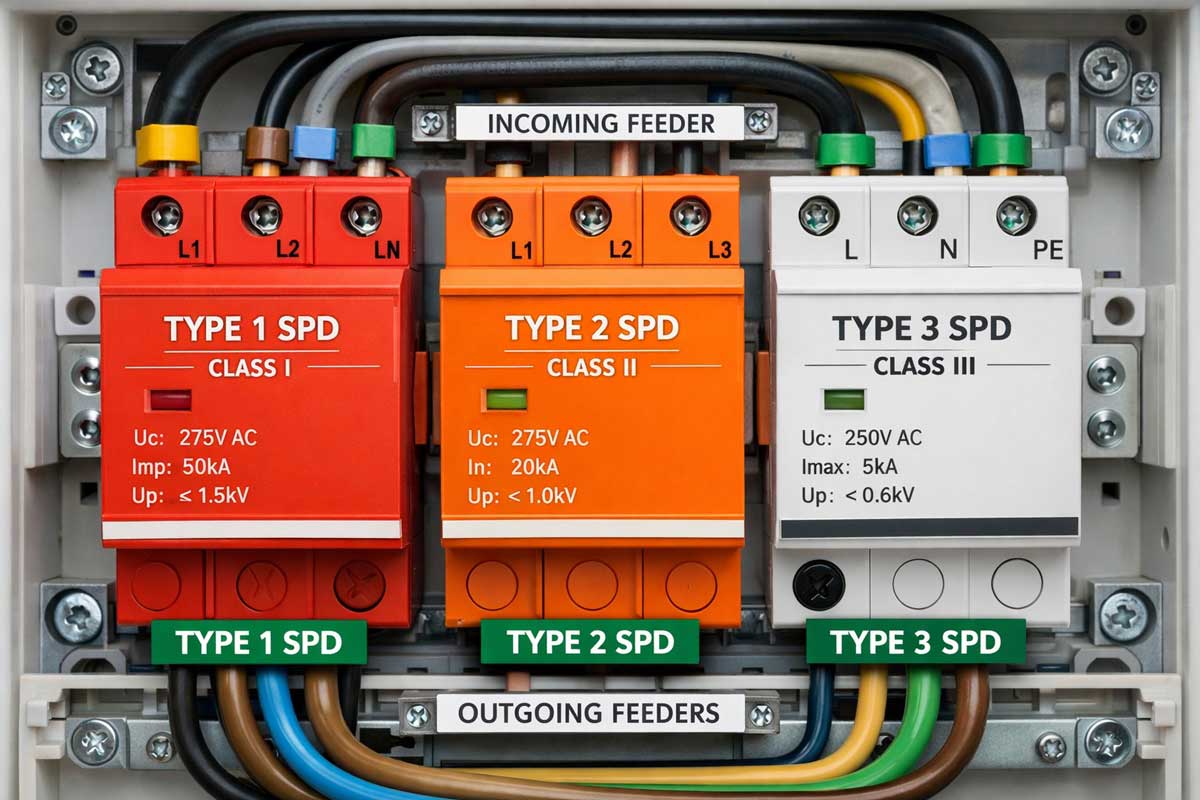
SPDs are classified based on where they are installed and the type of surge energy they are designed to handle. Each type plays a distinct role in a layered protection strategy.
- Type 1 SPDs are installed at the service entrance and are designed to handle high-energy surges, including those caused by direct lightning strikes.
- Type 2 SPDs are typically installed at distribution boards to limit residual surges that pass through the first stage.
- Type 3 SPDs are placed close to sensitive equipment to provide fine protection against low-energy transients.
While this classification is well known, problems arise when devices are installed without proper coordination between stages.
The Importance of SPD Selection Based on System Conditions
Selecting an SPD is not a matter of choosing the highest rating available. The device must be compatible with the system’s voltage level, earthing arrangement, short-circuit capacity, and lightning exposure. In Indian facilities, variations in earthing quality and fault levels make generic selection particularly risky.
Improper selection can result in devices failing prematurely, not operating when needed, or even creating additional hazards during fault conditions. Selection must therefore be based on a clear understanding of system parameters and risk exposure.
What SPD Coordination Really Means
SPD coordination ensures that surge energy is progressively reduced as it moves through the electrical system. If coordination is poor, downstream devices may be exposed to energy levels they are not designed to handle, even though SPDs are installed upstream.
Effective coordination depends on factors such as:
- Distance between SPDs
- Voltage protection levels of each device
- Response characteristics during surge events
Without coordination analysis, adding more SPDs does not necessarily improve protection and can sometimes worsen system performance.
Common Issues Seen in Indian Facilities
In practice, many Indian facilities install SPDs as a corrective measure after repeated equipment failures. These installations are often reactive and lack a system-wide view. As a result, protection remains fragmented.
Limited bullet reference—frequently observed gaps include:
- SPDs installed only at panels, ignoring incoming services
- No coordination between lightning protection, earthing, and SPDs
These gaps explain why sensitive equipment continues to fail despite visible surge protection devices being present.
Integrating Surge Protection with Earthing and Lightning Systems
SPDs do not work in isolation. Their effectiveness depends heavily on the quality of the earthing and bonding system. A poorly designed earth path increases residual voltage and reduces SPD performance. Similarly, lack of bonding between services allows potential differences to develop during surge events.
This is why surge protection must be viewed as part of a broader electrical safety strategy that includes earthing and lightning protection, rather than as a standalone solution.
Moving from Reactive Fixes to Planned Protection
A structured surge protection strategy begins with risk assessment, not product selection. Understanding exposure, system configuration, and equipment sensitivity allows protection to be designed logically rather than reactively. This approach reduces long-term costs and improves system reliability.
For facilities planning upgrades or expansions, early integration of surge protection design prevents expensive retrofits later.
How Wire Consultancy Helps
Wire Consultancy supports Indian industrial and commercial facilities by providing SPD selection and coordination studies aligned with international standards and local operating conditions. Their consultative approach focuses on risk evaluation, system compatibility, and coordination strategy, without involvement in installation or product supply. By designing surge protection based on engineering analysis rather than assumptions, Wire Consultancy helps organizations protect sensitive equipment, improve electrical reliability, and reduce the hidden costs of surge-related failures.