Lightning is one of the few electrical hazards that cannot be prevented—but its consequences can be accurately predicted and effectively controlled. In India, where lightning activity is high across many regions, damage caused by lightning strikes remains a recurring issue for industrial plants, commercial buildings, substations, and critical infrastructure. Equipment failures, fires, service interruptions, and safety incidents often stem not from a lack of protection, but from protection that was never properly assessed. This is where lightning risk assessment, as defined by IEC 62305, plays a critical role.
Why Lightning Protection Should Begin with Risk Assessment
A common misconception is that lightning protection simply means installing air terminals and earthing them. In reality, not every structure requires the same level of protection, and some may not require external protection at all. Overdesign leads to unnecessary cost, while underdesign exposes facilities to severe risk.
IEC 62305 addresses this problem by introducing a structured, risk-based approach. Instead of relying on assumptions, the standard evaluates the actual likelihood of lightning damage and its potential consequences. The objective is to determine whether protection is required and, if so, what level of protection is technically justified.
Understanding the IEC 62305 Framework
IEC 62305 divides lightning protection into four parts, with risk assessment covered under Part 2. The latest methodology of IEC 62305: 2024 edition is built around the concept of calculated total risk, calculated frequency of damage and the tolerable levels. In simple terms, the standard compares calculated risk with acceptable risk & its frequency. If calculated risk value exceeds the tolerable limit, protection measures must be implemented. However, if the total risk value do not exceed the tolerable limit; protection measures should be taken if the frequency of damage is more than tolerable level.
The assessment considers safety of persons (type of loss L1) and of the structure and its content (type of loss L2). This makes the approach particularly relevant for Indian facilities where safety, business continuity, and regulatory exposure are closely linked.
Key Factors Considered During Risk Assessment
Lightning risk assessment is data-driven. It evaluates both the probability of a lightning event affecting a structure and the severity of the resulting damage. Several parameters influence this calculation, including geographical location, structure characteristics, and how the facility is used.
The assessment examines:
- Local lightning ground flash density
- Dimensions and location of the structure
- Type of construction and materials used
- Occupancy levels and presence of hazardous processes
These factors help determine how likely a lightning strike is and what kind of damage it could cause.
External and Internal Lightning Risks
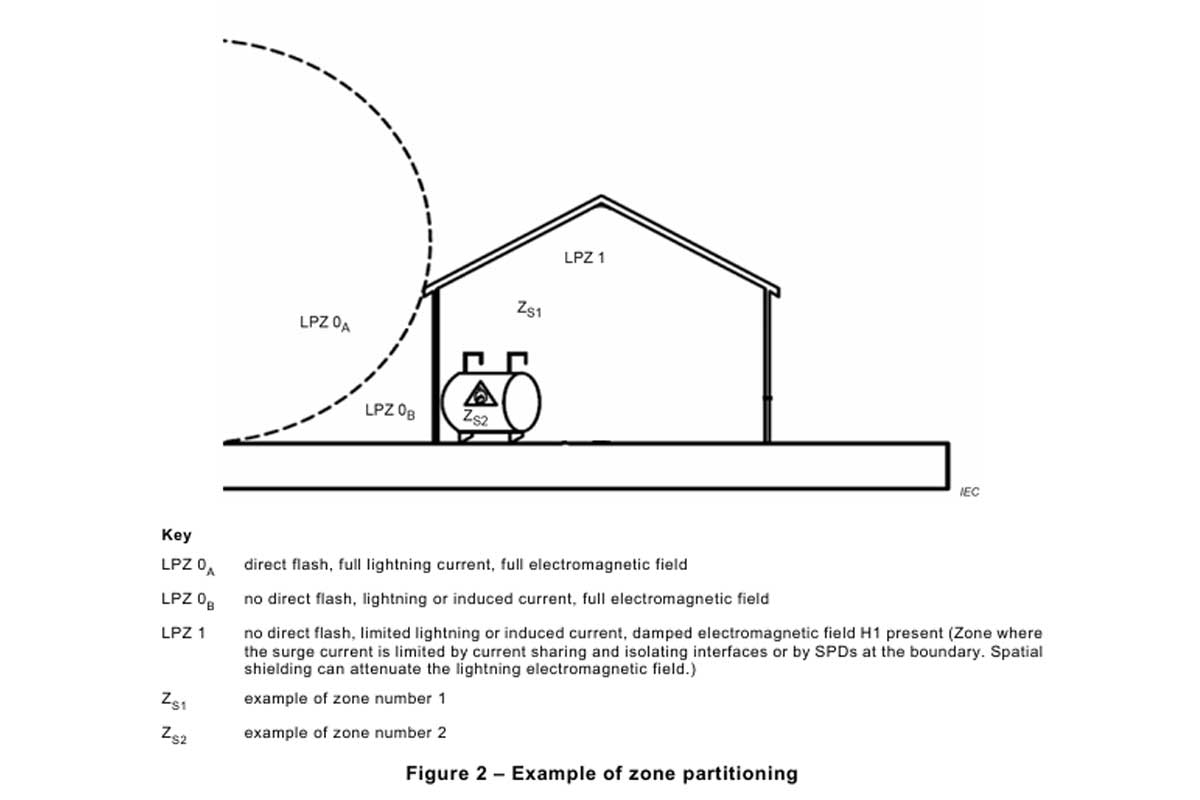
IEC 62305 does not limit its focus to direct lightning strikes. It also addresses indirect effects, which are often more damaging in modern facilities. Nearby lightning strikes can induce surges in power lines, communication cables, and control circuits, damaging sensitive electronic equipment.
The risk assessment evaluates:
- Direct strikes to the structure
- Strikes to connected services such as power and data lines
- Nearby strikes that induce transient overvoltages
This holistic view is particularly important for facilities with IT Server/ Data Centre, Automation systems, instrumentation, and digital controls.
Calculating Risk and Interpreting Results
The outcome of the assessment is a set of calculated risk values, each corresponding to a specific type of loss. These values are compared against tolerable risk limits defined in the standard. If any calculated risk exceeds the tolerable level, mitigation measures are required.
Mitigation may include external lightning protection systems, surge protection devices, bonding improvements, or changes in routing of incoming services. The key advantage of this method is that protection measures are selected based on quantified risk rather than generic rules.
Why IEC 62305 Is Especially Relevant for Indian Facilities
India’s diverse geography results in widely varying lightning exposure. Coastal regions, hilly terrain, and central plains experience different strike densities. Applying a uniform protection approach across all sites leads to inefficiencies and safety gaps.
Additionally, many Indian facilities operate mixed-use structures where industrial processes, offices, and control rooms coexist. IEC 62305 accounts for these complexities by linking protection requirements directly to usage and occupancy patterns.
Limited Bullet Reference: Common Gaps Identified in Practice
Lightning risk assessments frequently reveal:
- Absence of surge protection despite high internal risk
- Lightning protection systems installed without proper risk justification
These gaps often explain recurring equipment failures and unexplained outages.
From Assessment to Long-Term Protection Strategy
A lightning risk assessment is not a one-time exercise. Facility expansions, changes in occupancy, or modifications to electrical systems can alter risk levels. Periodic review ensures that protection measures remain aligned with actual conditions.
By following IEC 62305, organizations gain a defensible, internationally recognized basis for their lightning protection decisions—useful not only for safety, but also for audits, insurance, and regulatory compliance.
How Wire Consultancy Helps
Wire Consultancy provides IEC 62305 Latest edition 2024–compliant lightning risk assessment services for industrial, commercial and infrastructure facilities across India. Their role is strictly consultative, focusing on risk calculation, technical evaluation, and protection strategy development, without involvement in installation or maintenance. By applying a structured, standard-based approach, Wire Consultancy helps organizations implement justified, cost-effective, and reliable lightning protection measures that align with both safety and operational priorities.